 By DailyYogafactsblog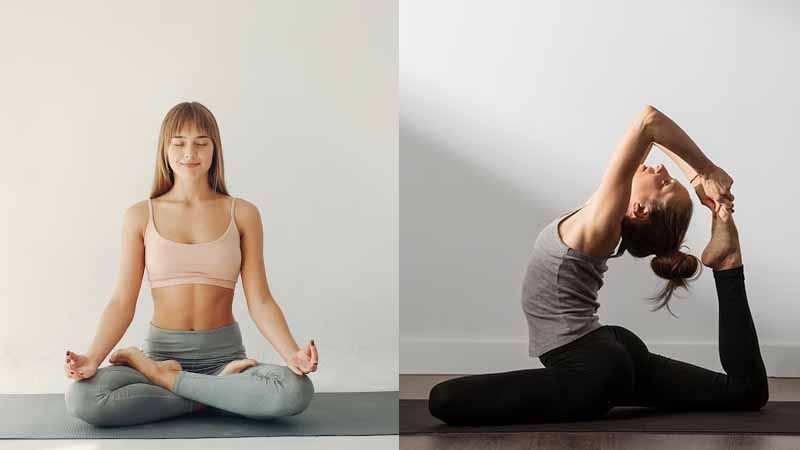
Introduction
In today’s fast-paced world, many people are seeking ways to reduce stress, improve health, and cultivate inner peace. As a result, mind–body practices such as yoga and meditation have gained widespread popularity. While these practices are often mentioned together and sometimes used interchangeably, they are distinct disciplines with unique approaches and benefits. Understanding their similarities and differences helps practitioners choose the path that best supports their physical, mental, and emotional well-being.
Yoga and meditation both originated in ancient spiritual traditions and aim to create harmony between the mind, body, and breath. However, each practice emphasizes different methods for achieving balance and awareness. By exploring their foundations, we can better appreciate how they complement one another while serving different purposes.
Understanding Mind–Body Practices
Mind–body practices are techniques that focus on the connection between mental processes and physical health. These practices are based on the idea that the mind and body are deeply interconnected, and that improving mental awareness can positively influence physical well-being—and vice versa.
Common mind–body practices include yoga, meditation, tai chi, qigong, and breathwork. They typically involve:
- Focused attention or awareness
- Controlled breathing
- Intentional movement or stillness
- Cultivation of mindfulness and presence
Through regular practice, mind–body techniques can help reduce stress, enhance concentration, support emotional regulation, and promote overall health. Yoga and meditation are two of the most well-known mind–body practices, but they approach this connection in different ways—one primarily through movement and posture, and the other through stillness and observation.
Why Yoga and Meditation Are Often Confused
Yoga and meditation are often confused because they share common roots and overlapping goals. Both practices originated in ancient Indian philosophy and were traditionally used as tools for self-awareness, inner peace, and spiritual growth. In many yoga classes, meditation is included at the beginning or end of the session, further blurring the lines between the two.
Another reason for the confusion is that modern yoga emphasizes mindfulness, breath awareness, and mental focus—elements commonly associated with meditation. Likewise, meditation often involves observing the breath or bodily sensations, which can feel similar to certain yoga practices.
Despite these similarities, the primary difference lies in how the practice is performed:
- Yoga typically involves physical postures, movement, and breath control to prepare the body and mind.
- Meditation focuses on mental stillness, awareness, and observation, often practiced while sitting or lying down.
Understanding this distinction allows practitioners to approach each practice with clarity and intention, using them either separately or together to support a balanced and mindful lifestyle.
What Is Yoga?
Yoga is an ancient, holistic practice that integrates the body, mind, and spirit to promote balance, health, and self-awareness. More than just a form of physical exercise, yoga is a complete lifestyle system rooted in philosophy, ethics, breath control, movement, concentration, and meditation. The word yoga comes from the Sanskrit root “yuj,” meaning to unite or to join, symbolizing the union of individual consciousness with universal awareness.
Traditionally, yoga was practiced as a spiritual discipline aimed at self-realization and inner freedom. In the modern world, yoga has evolved into many forms, often emphasizing physical postures and stress relief, while still retaining its deeper mental and spiritual foundations.
Origins and History of Yoga
The origins of yoga date back over 5,000 years to ancient India. Its earliest references are found in the Vedas, sacred Hindu texts that describe early forms of meditation, ritual, and spiritual discipline. Over time, yoga developed through various philosophical and spiritual traditions.
Key historical milestones include:
- The Vedic Period (c. 1500–500 BCE): Early yogic ideas focused on rituals, chanting, breath control, and meditation.
- The Upanishads: These philosophical texts emphasized inner knowledge, self-inquiry, and meditation, shaping yoga as a path toward enlightenment.
- The Bhagavad Gita: This important scripture introduced different paths of yoga, such as Karma Yoga (path of action), Bhakti Yoga (path of devotion), and Jnana Yoga (path of wisdom).
- Patanjali’s Yoga Sutras (c. 200 BCE–400 CE): Patanjali systematized yoga into a clear framework known as the Eight Limbs of Yoga, which remains foundational today.
- Hatha Yoga Tradition (c. 9th–15th century): This period emphasized physical postures, breath control, and energy purification, forming the basis of most modern yoga styles.
In the 20th century, yoga spread globally through influential teachers, adapting to contemporary lifestyles while preserving its philosophical roots.
The Eight Limbs of Yoga
The Eight Limbs of Yoga, outlined by sage Patanjali, provide a comprehensive guide for living a meaningful and balanced life. These limbs progress from ethical behavior to deep states of meditation and self-realization.
- Yama (Ethical Restraints):
Moral principles guiding our interactions with others, including non-violence (ahimsa), truthfulness (satya), and non-attachment (aparigraha). - Niyama (Personal Observances):
Self-discipline and spiritual practices such as cleanliness (saucha), contentment (santosha), and self-study (svadhyaya). - Asana (Postures):
Physical poses designed to build strength, flexibility, stability, and comfort in the body, preparing it for meditation. - Pranayama (Breath Control):
Conscious regulation of the breath to enhance energy flow, calm the nervous system, and improve mental clarity. - Pratyahara (Withdrawal of the Senses):
Turning attention inward by reducing sensory distractions, creating a bridge between external and internal practices. - Dharana (Concentration):
Sustained focus on a single point, object, or thought to train the mind. - Dhyana (Meditation):
Effortless, continuous awareness and deep mental absorption. - Samadhi (Enlightenment):
A state of profound peace, unity, and self-realization where the sense of separation dissolves.
Physical, Mental, and Spiritual Aspects of Yoga
Yoga addresses the human experience on multiple levels:
Physical Aspects:
Yoga improves flexibility, strength, posture, balance, and coordination. Regular practice can support joint health, improve circulation, aid digestion, and reduce physical tension. Unlike conventional exercise, yoga emphasizes mindful movement and body awareness.
Mental Aspects:
Through breath awareness and focused movement, yoga calms the mind, reduces stress, and enhances concentration. It encourages mindfulness, emotional stability, and a deeper understanding of thought patterns.
Spiritual Aspects:
Spiritually, yoga fosters self-awareness, compassion, and inner peace. It encourages reflection, ethical living, and connection to a deeper sense of purpose. While yoga is not a religion, it offers tools for spiritual growth regardless of belief system.
Common Types of Yoga
Modern yoga includes many styles, each with unique characteristics and benefits:
- Hatha Yoga:
A gentle, foundational style focusing on basic postures and breathing. Ideal for beginners and those seeking a slower-paced practice. - Vinyasa Yoga:
A dynamic, flowing style where movement is synchronized with breath. It builds strength, flexibility, and cardiovascular endurance. - Ashtanga Yoga:
A structured and physically demanding practice following a fixed sequence of poses. It emphasizes discipline, strength, and stamina. - Iyengar Yoga:
Focuses on precise alignment and uses props such as blocks and straps to support proper posture. - Yin Yoga:
A slow, meditative style where poses are held for extended periods to target deep connective tissues and promote relaxation. - Restorative Yoga:
Uses props to fully support the body in passive poses, encouraging deep rest and nervous system recovery. - Kundalini Yoga:
Combines movement, breathwork, chanting, and meditation to awaken inner energy.
Each type of yoga offers unique benefits, allowing practitioners to choose a style that aligns with their physical needs, mental state, and personal goals.
What Is Meditation?
Meditation is a mental and spiritual practice that involves training the mind to develop awareness, clarity, and inner calm. Unlike physical exercise, meditation primarily works with attention, perception, and consciousness. It encourages individuals to observe thoughts, emotions, and sensations without judgment, fostering a state of presence and mental stillness.
At its core, meditation is not about stopping thoughts but about changing the relationship with them. Through regular practice, meditation helps cultivate equanimity, emotional balance, and a deeper understanding of the mind. While meditation is often associated with spirituality, it is widely practiced today for mental health, stress reduction, and personal growth, regardless of religious or philosophical beliefs.
Origins and History of Meditation
Meditation has been practiced for thousands of years across diverse cultures and spiritual traditions. Its earliest documented references appear in ancient Hindu texts, but the practice evolved independently in multiple regions of the world.
Key historical developments include:
- Ancient India:
Early meditation practices were described in the Vedas and Upanishads, focusing on self-inquiry, contemplation, and realization of the true self (Atman). - Buddhism (c. 6th century BCE):
Meditation became central to Buddhist practice through techniques such as Vipassana (insight meditation) and Samatha (calm-abiding). The Buddha emphasized mindfulness and awareness as paths to liberation from suffering. - Taoism and Confucianism (China):
Meditative practices focused on harmony, breath regulation, and alignment with natural rhythms. - Zen Buddhism (Japan):
Introduced Zazen, a seated meditation emphasizing posture, breath, and direct awareness. - Modern Era:
In the 20th century, meditation spread globally through teachers and scientific research. Practices such as Mindfulness-Based Stress Reduction (MBSR) helped integrate meditation into healthcare, psychology, and education.
Today, meditation is practiced worldwide as both a spiritual discipline and a secular tool for mental well-being.
Core Principles of Meditation
While meditation techniques vary, most share several fundamental principles:
- Attention:
Directing focus to a chosen object such as the breath, a mantra, or bodily sensations. - Awareness:
Observing thoughts, emotions, and sensations as they arise, without attachment or resistance. - Non-Judgment:
Allowing experiences to occur without labeling them as good or bad. - Consistency:
Regular practice strengthens mental clarity and emotional resilience over time. - Presence:
Anchoring the mind in the present moment rather than dwelling on the past or future.
These principles help quiet mental distractions and develop a more balanced, compassionate relationship with inner experiences.
Types of Meditation
Meditation encompasses a wide range of techniques, each serving different needs and preferences:
Mindfulness Meditation:
Focuses on present-moment awareness, often using the breath as an anchor. Practitioners observe thoughts and sensations without judgment, cultivating clarity and acceptance.
Loving-Kindness Meditation (Metta):
Involves generating feelings of goodwill and compassion toward oneself and others. This practice supports emotional healing, empathy, and positive relationships.
Mantra Meditation:
Uses the repetition of a word, phrase, or sound to focus the mind. Mantras can be spoken aloud or silently, helping reduce mental chatter.
Guided Meditation:
Led by a teacher or audio recording, guided meditation uses imagery, instructions, or storytelling to promote relaxation and awareness. It is especially helpful for beginners.
Other forms include body scan meditation, visualization, transcendental meditation, and breath-focused practices.
The Role of Awareness and Stillness
Awareness and stillness are central to meditation. Awareness allows practitioners to observe internal experiences clearly, while stillness creates the space needed for insight and calm. Physical stillness—often achieved through seated or lying postures—supports mental steadiness, though movement-based meditation also exists.
Through sustained awareness and stillness, meditation helps quiet habitual thought patterns and fosters inner peace. Over time, this practice can lead to greater self-understanding, emotional balance, and a deep sense of connection to the present moment.
Key Differences Between Yoga and Meditation
Yoga and meditation are closely related practices, yet they differ in method, emphasis, and experience. While both aim to cultivate balance, awareness, and well-being, they approach these goals through different means. Understanding these differences helps practitioners choose the practice—or combination of practices—that best suits their needs and lifestyle.
Movement vs. Stillness
One of the most noticeable differences between yoga and meditation is the role of movement.
Yoga is primarily a movement-based practice. It involves a series of physical postures (asanas) that may be dynamic and flowing, as in Vinyasa, or slow and held, as in Hatha or Yin yoga. Movement in yoga is intentional and mindful, coordinated with the breath to build strength, flexibility, balance, and bodily awareness.
Meditation, on the other hand, emphasizes stillness. Most meditation practices are performed while sitting, lying down, or standing quietly. The body remains relatively motionless so the practitioner can turn attention inward. This physical stillness supports mental clarity and deeper awareness.
In essence, yoga uses movement as a gateway to mindfulness, while meditation uses stillness to access inner awareness.
Physical Practice vs. Mental Practice
Another key distinction lies in the primary focus of each practice.
Yoga engages the physical body as its main entry point. Through postures, stretching, and breath control, yoga conditions the muscles, joints, and nervous system. While the mental and emotional benefits of yoga are significant, the practice often begins with physical engagement and gradually leads to mental calm.
Meditation is fundamentally a mental practice. It works directly with attention, awareness, and perception. Rather than changing the body’s position, meditation trains the mind to observe thoughts and emotions without attachment or judgment. Physical comfort is important, but it serves only to support mental focus.
Simply put, yoga starts with the body to influence the mind, whereas meditation starts with the mind to influence inner experience.
Breath, Body, and Mind Engagement
Both yoga and meditation involve the breath, body, and mind, but they emphasize these elements differently.
In yoga, breath (pranayama) is actively coordinated with movement. The body is continuously engaged through postures, and the mind focuses on alignment, balance, and breath awareness. This triad—breath, body, and mind—works together dynamically.
In meditation, the breath is usually observed rather than controlled. The body remains still, serving as an anchor for awareness. The mind becomes the primary focus, observing thoughts, sensations, and emotions as they arise.
Yoga integrates breath and movement to quiet the mind, while meditation uses breath and awareness to stabilize the mind without physical movement.
Goals and Outcomes
Although yoga and meditation share overlapping benefits, their immediate goals and long-term outcomes often differ.
Yoga goals and outcomes include:
- Improved flexibility, strength, and posture
- Reduced physical tension and pain
- Increased energy and vitality
- Enhanced mind–body awareness
- Preparation of the body and mind for meditation
Meditation goals and outcomes include:
- Mental clarity and focus
- Emotional regulation and resilience
- Reduced stress, anxiety, and reactivity
- Greater self-awareness and inner peace
- Deepened insight and mindfulness
Ultimately, yoga is often seen as a preparatory or integrative practice, while meditation is a direct practice of awareness and stillness. Together, they form a powerful, complementary approach to holistic well-being.
How Yoga and Meditation Are Connected
Yoga and meditation are not separate or opposing practices; rather, they are deeply interconnected and complementary. In traditional teachings, meditation is an integral part of yoga, and yoga serves as a pathway that naturally leads toward meditative awareness. Together, they create a holistic system for cultivating physical health, mental clarity, and inner peace.
Modern practice often separates yoga and meditation into distinct activities, but their shared roots reveal that they are meant to support and enhance one another.
Meditation Within Yoga Practice
Meditation is woven throughout a complete yoga practice, even when it is not explicitly labeled as such. During yoga, practitioners are encouraged to focus on the breath, bodily sensations, and present-moment awareness. This focused attention mirrors the essence of meditation.
Moments of meditation in yoga include:
- Mindful awareness during postures, where attention remains on alignment, balance, and sensation
- Pauses between movements, allowing the mind to settle
- Savasana (Corpse Pose) at the end of practice, where deep relaxation often leads to meditative stillness
In classical yoga, meditation (dhyana) is one of the Eight Limbs, highlighting that physical postures are not the final goal but a foundation for deeper inner practices. Even a flowing yoga class can become a moving meditation when performed with awareness and intention.
The Role of Breath (Pranayama)
The breath acts as a powerful bridge between yoga and meditation. Known as pranayama in yoga philosophy, breath regulation influences both physical energy and mental states.
In yoga practice:
- Breath is synchronized with movement to create rhythm and flow
- Controlled breathing helps calm the nervous system
- Awareness of breath anchors attention in the present moment
In meditation:
- The breath is often used as the primary object of focus
- Observing natural breathing stabilizes attention and quiets the mind
- Breath awareness cultivates mindfulness without effort
Pranayama prepares the mind for meditation by reducing restlessness and enhancing concentration. Whether the breath is actively guided or simply observed, it remains a central tool in both practices.
Yoga as Preparation for Meditation
One of the traditional purposes of yoga is to prepare the body and mind for seated meditation. Physical discomfort, restlessness, and shallow breathing can make meditation challenging. Yoga addresses these obstacles by:
- Releasing muscular tension and stiffness
- Improving posture and spinal alignment
- Increasing flexibility in the hips and spine
- Calming the nervous system through mindful movement
When the body is relaxed yet stable, and the breath is smooth and steady, meditation becomes more accessible and comfortable. Yoga helps create the ideal conditions for stillness, allowing practitioners to sit longer with ease and focus.
Common Myths and Misconceptions
Despite their growing popularity, yoga and meditation are often misunderstood. These misconceptions can prevent people from starting or fully benefiting from either practice. Clarifying these myths helps create a more accurate and approachable understanding.
“Yoga Is Only Exercise”
One of the most common misconceptions is that yoga is simply a form of physical exercise or stretching. While modern yoga classes often emphasize strength, flexibility, and fitness, yoga is far more than a workout.
Traditionally, yoga is a comprehensive system that includes:
- Ethical principles for living (Yama and Niyama)
- Breath control (Pranayama)
- Mental focus and meditation (Dharana and Dhyana)
- Spiritual insight and self-awareness
The physical postures (asanas) are just one aspect of yoga, designed to prepare the body for deeper inner practices. Even in physically demanding styles, yoga encourages mindfulness, breath awareness, and intentional movement—elements not typically found in conventional exercise.
“Meditation Requires Emptying the Mind”
Another widespread myth is that meditation means stopping all thoughts or achieving a completely blank mind. This misunderstanding often leads beginners to believe they are “failing” at meditation.
In reality, meditation is not about eliminating thoughts but about observing them without judgment or attachment. Thoughts naturally arise during meditation—this is a normal function of the mind. The practice lies in gently noticing when the mind wanders and returning attention to the chosen focus, such as the breath.
Meditation teaches:
- Awareness rather than control
- Acceptance rather than resistance
- Observation rather than suppression
Over time, this approach leads to greater clarity and calm, even though thoughts may still appear.
Frequently Asked Questions (FAQs)
Can Beginners Practice Both?
Yes, absolutely. Yoga and meditation are both suitable for beginners, and they can be practiced together or separately. Beginners are encouraged to start gently, choosing accessible styles of yoga and short meditation sessions.
For newcomers:
- Gentle or beginner yoga helps build body awareness and comfort
- Short meditation sessions (5–10 minutes) make the practice manageable
- Consistency matters more than duration or intensity
Both practices can be adapted to individual needs, ages, and physical abilities.
How Long Should Each Practice Be?
There is no fixed rule for how long yoga or meditation should be practiced. The ideal duration depends on personal goals, lifestyle, and experience level.
General guidelines include:
- Yoga: 20–60 minutes per session
- Meditation: 5–30 minutes per session
Even brief practices can be beneficial when done regularly. A short daily routine often produces better results than occasional long sessions.
Which Should I Do First: Yoga or Meditation?
Traditionally, yoga is practiced before meditation. Physical movement helps release tension, regulate the breath, and calm the nervous system, making meditation more comfortable and focused.
However, there is flexibility:
- If your body feels stiff or restless, start with yoga
- If your body is already relaxed, you may begin with meditation
- Some people prefer meditation alone or yoga alone, depending on their needs
The best sequence is the one that feels sustainable and supportive.
Conclusion
Yoga and Meditation as Complementary Practices
Yoga and meditation are not competing disciplines; they are complementary practices that work together to support holistic well-being. Yoga prepares the body and mind through movement and breath, while meditation deepens awareness through stillness and observation.
Together, they:
- Support physical health and mental clarity
- Reduce stress and emotional reactivity
- Encourage mindfulness and self-awareness
- Foster balance between effort and ease
Finding Balance Between Movement and Stillness
In a world that often demands constant activity, yoga offers mindful movement, and meditation offers intentional stillness. Finding the right balance between these two practices allows individuals to reconnect with themselves on a deeper level.
By embracing both movement and stillness, practitioners can cultivate resilience, presence, and inner peace—on and off the mat. Whether practiced separately or together, yoga and meditation provide timeless tools for living a more balanced, conscious, and fulfilling life.