 By DailyYogafactsblog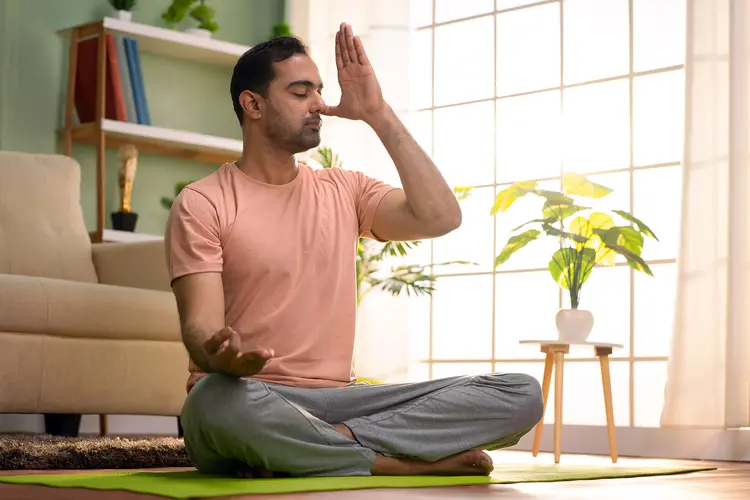
Introduction to Pranayama
Breathing is one of the most natural and automatic processes of the human body. Yet, most of us breathe shallowly, irregularly, or without conscious awareness. In yoga, breath is much more than a physical necessity—it is a bridge between the body, mind, and energy. This is where Pranayama, the ancient practice of breath control, comes in.
What is Pranayama?
The word Pranayama comes from two Sanskrit words:
- Prana – meaning “life force” or “vital energy”
- Ayama – meaning “extension” or “control”
So, Pranayama literally means the control or regulation of life force through the breath. In practice, it involves conscious techniques for inhaling, exhaling, and holding the breath, designed to optimize the flow of prana in the body.
Unlike normal breathing, which happens unconsciously, Pranayama is intentional and mindful, allowing practitioners to influence their mental state, energy levels, and physical well-being. Regular practice can calm the mind, strengthen the respiratory system, and create harmony between body and mind.
The Science of Breath
Breathing is directly linked to our autonomic nervous system, which controls involuntary functions like heartbeat, digestion, and stress response. By consciously regulating breath, Pranayama allows us to influence these automatic processes, bringing balance to the nervous system.
- Slow, deep breathing activates the parasympathetic nervous system, which promotes relaxation, reduces stress, and lowers heart rate and blood pressure.
- Rapid or forceful breathing can stimulate the sympathetic nervous system, increasing alertness and energy levels.
From a physiological perspective, Pranayama enhances lung capacity, oxygen uptake, and circulation, ensuring that every cell receives optimal oxygen for energy and repair. Some studies have shown that regular practice can also improve immune function, reduce inflammation, and support mental health.
Historical and Philosophical Background
Pranayama has its roots in ancient India, with references in texts such as the Yoga Sutras of Patanjali, the Hatha Yoga Pradipika, and the Bhagavad Gita. In these texts, breath is considered a vehicle for controlling the mind and expanding consciousness.
Philosophically, Pranayama is more than just a physical practice—it is a tool for spiritual growth. Ancient yogis believed that the mind is turbulent because life energy is scattered or blocked. By mastering the breath, one can control mental fluctuations, cultivate inner calm, and experience higher awareness.
Pranayama was traditionally taught as part of a holistic yoga system, alongside asanas (physical postures), meditation, and ethical practices, making it a complete tool for mind-body transformation.
Benefits of Pranayama for Mind and Body
Pranayama offers a wide range of benefits that affect both the physical body and the mental-emotional state:
1. Physical Benefits
- Strengthens the lungs and improves respiratory efficiency.
- Enhances oxygenation of the blood and removal of toxins.
- Regulates blood pressure and improves circulation.
- Supports digestive health and boosts metabolism.
- Improves stamina and physical endurance.
2. Mental and Emotional Benefits
- Reduces stress, anxiety, and emotional tension.
- Calms the mind and improves focus and concentration.
- Enhances self-awareness and mindfulness.
- Improves sleep quality and reduces insomnia.
- Helps manage emotions, leading to greater emotional stability.
3. Energetic and Spiritual Benefits
- Balances life force energy (prana) in the body.
- Prepares the mind for meditation and higher states of awareness.
- Cultivates inner peace, clarity, and a sense of connectedness.
In essence, Pranayama is not just about breathing—it is a pathway to holistic well-being, connecting the physical, mental, and spiritual dimensions of life.
Understanding Breath and Energy
Breath is more than just oxygen entering the lungs—it is a dynamic bridge between the body, mind, and life force energy. In yoga, understanding the relationship between breath and energy is crucial for effective Pranayama practice.
The Role of Breath in Yoga
In yoga, breath is considered the foundation of all practices. Every posture (asana), movement, and meditation technique is coordinated with breathing. The breath serves multiple roles:
- Physical Role – Provides oxygen to the body, removes carbon dioxide, and fuels cellular metabolism.
- Energetic Role – Moves life force energy (prana) through energy channels (nadis) and energy centers (chakras).
- Mental Role – Directly influences emotional states, concentration, and mental clarity.
By consciously controlling the breath, yogis can influence physical vitality, emotional balance, and mental focus, making Pranayama a powerful tool for holistic well-being.
Prana: Life Force Energy
Prana is the subtle life force that animates the body. It is present in every cell, every breath, and every moment of consciousness. Just as the wind moves the leaves, prana flows through the nadis (energy channels) and nourishes the mind and body.
Pranayama works by:
- Increasing the flow of prana in the body.
- Removing blockages that prevent energy from moving freely.
- Balancing the energy between different parts of the body and mind.
When prana is balanced, one experiences vitality, mental clarity, and emotional harmony. When prana is blocked or irregular, it can manifest as fatigue, stress, anxiety, or physical ailments.
How Breath Affects the Nervous System
Scientific studies have shown that breath is a direct bridge to the autonomic nervous system, which controls involuntary body functions:
- Slow, deep breathing stimulates the parasympathetic nervous system (rest-and-digest mode), lowering stress hormones, heart rate, and blood pressure.
- Rapid or controlled breathing can stimulate the sympathetic nervous system (fight-or-flight mode), enhancing alertness, focus, and energy.
Through Pranayama, one can intentionally modulate the nervous system, reducing stress, improving mood, and supporting overall physiological balance.
Connection Between Breath, Mind, and Emotions
Breathing and emotions are intimately connected:
- Shallow, fast, or irregular breathing often accompanies anxiety, fear, or stress.
- Slow, rhythmic breathing fosters calm, focus, and emotional stability.
Pranayama trains practitioners to observe the breath, recognize emotional states, and respond consciously rather than react impulsively. Over time, this cultivates mindfulness, emotional resilience, and inner peace.
Preparing for Pranayama Practice
Before starting Pranayama, preparation is key to ensure safety, comfort, and maximum benefit. Beginners should follow a structured approach.
Ideal Time and Place
- Time: The best time for Pranayama is early morning on an empty stomach, as the mind is calm and the air is fresh. Evening practice is also possible but avoid immediately after meals or strenuous activities.
- Place: Choose a quiet, clean, and well-ventilated space. Ideally, practice outdoors or in a room free of distractions. Use a yoga mat or comfortable seating.
Clothing and Comfort
- Wear loose, breathable clothing to allow free movement of the abdomen and chest.
- Remove shoes and belts that may restrict the diaphragm.
- Sit on a cushion, folded blanket, or mat to support spinal alignment and comfort during prolonged sitting.
Comfort enhances focus and allows for uninterrupted, deep breathing.
Posture and Alignment
Proper posture is essential in Pranayama to allow optimal lung expansion and free flow of prana.
- Sit in a cross-legged position (Sukhasana, Siddhasana) with a straight spine.
- Keep shoulders relaxed, chest open, and chin slightly tucked.
- Hands can rest on the knees or in a mudra (hand gesture) to support energy flow.
- If sitting on the floor is uncomfortable, use a chair with a straight back, keeping feet flat and spine upright.
Good posture prevents dizziness, strain, or shallow breathing.
Safety Guidelines for Beginners
- Start slowly, with 5–10 minutes of practice. Gradually increase duration as comfort improves.
- Focus on smooth, gentle breaths rather than forceful inhalations or exhalations.
- Stop immediately if you feel dizziness, discomfort, or strain.
- Avoid comparing yourself to others—Pranayama is personal and gradual.
Precautions for Health Conditions
Certain health conditions require extra care:
- Respiratory issues (asthma, COPD): Avoid rapid or forceful breathing initially.
- Heart conditions or high blood pressure: Practice slow, gentle techniques and consult a healthcare professional.
- Pregnancy: Certain Pranayama techniques are not recommended; choose safe, calming breath practices.
- Vertigo, seizures, or recent surgeries: Consult a doctor before starting Pranayama.
Being mindful of your body and health ensures safe, effective, and sustainable practice.
By understanding the energy, science, and preparation behind breath control, beginners are equipped to start Pranayama safely and mindfully, setting the stage for profound physical, mental, and emotional benefits.
Basic Breathing Techniques
Before learning formal Pranayama techniques, it is essential to understand and practice basic breathing patterns. These help develop awareness of the breath, strengthen the respiratory system, and prepare for more advanced techniques.
Diaphragmatic (Abdominal) Breathing
What it is:
Diaphragmatic breathing, or deep belly breathing, involves using the diaphragm fully, allowing the abdomen to expand on inhalation and contract on exhalation.
Benefits:
- Increases lung capacity.
- Enhances oxygen intake and circulation.
- Activates the parasympathetic nervous system, promoting relaxation.
- Reduces stress and calms the mind.
How to Practice:
- Sit comfortably or lie on your back with knees slightly bent.
- Place one hand on your chest and the other on your abdomen.
- Inhale slowly through the nose, letting the abdomen rise while the chest remains relatively still.
- Exhale slowly through the nose or mouth, letting the abdomen fall naturally.
- Repeat for 5–10 minutes, maintaining a smooth, steady rhythm.
Thoracic (Chest) Breathing
What it is:
Thoracic breathing involves expanding the middle portion of the lungs, lifting the chest slightly with each inhalation.
Benefits:
- Strengthens intercostal muscles (between ribs).
- Improves oxygenation in the middle lung regions.
- Helps increase awareness of breath and posture.
How to Practice:
- Sit with a straight spine and relaxed shoulders.
- Inhale slowly, expanding the chest sideways and forward.
- Exhale smoothly, letting the chest return to its natural position.
- Place your hands lightly on your chest to feel the movement.
- Practice for 5 minutes, maintaining calm and even breathing.
Clavicular (Upper Chest) Breathing
What it is:
Clavicular breathing uses the upper portion of the lungs near the collarbones, often engaged during deep inhalation.
Benefits:
- Enhances upper lung capacity.
- Useful in preparing for intense or advanced breathing practices.
- Improves alertness and oxygen flow to the brain.
How to Practice:
- Sit upright with shoulders relaxed.
- Inhale deeply, allowing the upper chest and collarbone area to rise.
- Exhale slowly, letting the shoulders and chest return to rest.
- Keep the abdomen and lower chest relaxed.
- Practice 3–5 minutes, focusing on gentle, controlled movements.
Awareness and Mindful Breathing
Before starting Pranayama, it is essential to cultivate mindful awareness of the breath.
Practice:
- Sit comfortably and close your eyes.
- Observe your natural breath—its rhythm, depth, and sensation.
- Notice the rise and fall of your abdomen and chest.
- Try to breathe without altering the pattern, simply observing.
- Spend 5 minutes developing calm awareness and focus.
Benefits:
- Enhances concentration.
- Prepares the mind for structured Pranayama.
- Reduces mental chatter and cultivates mindfulness.
Foundational Pranayama Practices
Once basic breathing techniques are familiar, beginners can move on to foundational Pranayama practices. These are gentle, safe, and highly effective for building energy, calmness, and focus.
Nadi Shodhana (Alternate Nostril Breathing)
Benefits:
- Balances the nervous system.
- Harmonizes energy flow between the left and right hemispheres of the brain.
- Reduces stress, anxiety, and mental fatigue.
- Improves respiratory function and focus.
Step-by-Step Instructions:
- Sit in a comfortable, upright position.
- Close the right nostril with the thumb of your right hand.
- Inhale slowly through the left nostril.
- Close the left nostril with your ring finger, release the right nostril.
- Exhale slowly through the right nostril.
- Inhale through the right nostril, then close it and exhale through the left nostril.
- This completes one round. Start with 5 rounds and gradually increase.
Tips: Keep breath smooth and gentle, without force. Maintain awareness of the flow of energy and the calming effect.
Bhramari (Humming Bee Breath)
Benefits:
- Calms the mind and reduces agitation.
- Relieves anxiety, stress, and mild depression.
- Improves concentration and mental clarity.
- Activates parasympathetic nervous system for relaxation.
Step-by-Step Instructions:
- Sit comfortably with a straight spine.
- Close eyes and ears using index fingers (optional).
- Inhale deeply through the nose.
- Exhale slowly while making a low humming sound, like a bee.
- Feel vibrations in the head, face, and chest.
- Repeat for 5–10 breaths.
Tips: Focus on vibrations and sound. Keep exhalations smooth, gentle, and controlled.
Ujjayi (Victorious Breath)
Benefits:
- Enhances focus and mental stability.
- Increases oxygenation and circulation.
- Regulates body temperature.
- Supports meditation and physical yoga practices.
Step-by-Step Instructions:
- Sit comfortably or practice during asanas.
- Inhale deeply through the nose, slightly constricting the back of the throat.
- Exhale slowly through the nose with the same gentle constriction.
- Breath produces a soft, ocean-like sound.
- Continue for 5–10 minutes, keeping breath smooth and audible.
Tips: Maintain throat constriction gentle, not forced. Synchronize breath with movements if practicing with yoga postures.
Kapalabhati (Skull Shining Breath) – Beginner Version
Benefits:
- Cleanses the respiratory system.
- Stimulates abdominal organs and digestion.
- Increases energy and alertness.
- Improves oxygen supply to the brain.
Step-by-Step Instructions (Beginner Version):
- Sit upright with a straight spine.
- Take a deep inhalation.
- Exhale forcefully through the nose using the abdominal muscles while letting inhalation happen naturally.
- Start with 20–30 gentle exhalations in one round.
- Rest for a few breaths, then repeat 2–3 rounds.
Tips: Focus on gentle abdominal contractions, not straining. Stop immediately if dizzy. This is a stimulating practice, so avoid before bedtime.
These basic and foundational practices form the core of beginner Pranayama. When practiced consistently, mindfully, and safely, they enhance physical health, mental clarity, and emotional balance, providing a strong base for deeper breath control techniques in the future.
Frequently Asked Questions (FAQs)
As a beginner, it’s natural to have questions about Pranayama. Here are answers to the most common queries:
1. How Often Should I Practice?
For beginners, consistency is more important than duration.
- Start with 5–10 minutes daily, gradually increasing to 20–30 minutes as comfort and capacity grow.
- Practicing every day is ideal for building awareness, calmness, and energy regulation.
- If daily practice isn’t possible, aim for at least 3–4 sessions per week.
- Morning practice is optimal because the mind is calm and the body is fresh, but evening practice can also be beneficial for relaxation before sleep.
Tip: Focus on quality over quantity—even a few mindful minutes are more effective than rushing through long sessions.
2. Can Anyone Practice Pranayama?
Pranayama is generally safe for most people, but beginners should follow gentle techniques first.
- Children, adults, and seniors can practice, though the duration and intensity may vary.
- Individuals with health conditions such as respiratory, heart, or blood pressure issues should consult a healthcare professional and focus on slow, calming breaths.
- Pregnant women should avoid certain stimulating techniques and choose gentle, relaxing Pranayama only.
Pranayama is adaptable—anyone can benefit as long as practices are tailored to the individual’s capacity.
3. What to Do If I Feel Lightheaded?
Feeling lightheaded is common for beginners and usually happens due to over-breathing or holding the breath too long.
- Stop the practice immediately.
- Return to normal, gentle breathing.
- Sit quietly with eyes closed until the sensation passes.
- Gradually reduce intensity in future sessions, and focus on smooth, controlled breath rather than speed or force.
Tip: Always start slowly, and avoid comparing your breath with others. Comfort and safety are more important than perfection.
4. Can Pranayama Help With Anxiety or Sleep Issues?
Yes! Pranayama has been scientifically shown to regulate the nervous system, reduce stress, and promote relaxation.
- Techniques like Nadi Shodhana (Alternate Nostril Breathing) and Bhramari (Humming Bee Breath) activate the parasympathetic nervous system, helping calm racing thoughts.
- Regular practice improves sleep quality by reducing mental tension and balancing energy.
- Deep, mindful breathing lowers cortisol (stress hormone) and promotes emotional stability, making it a natural tool for anxiety relief.
Tip: Incorporating even a short Pranayama session before bedtime can improve sleep onset and restfulness.
Conclusion
Pranayama is more than a set of breathing exercises—it is a holistic tool for well-being, integrating body, mind, and energy. With consistent, mindful practice, even beginners can experience profound benefits, including calmness, clarity, vitality, and emotional balance.
Key Takeaways
- Breath is life energy: Conscious breath control (Pranayama) nurtures body, mind, and spirit.
- Start gently: Focus on basic techniques before moving to advanced practices.
- Consistency matters: Even a few minutes daily can yield noticeable benefits.
- Mindful practice: Pay attention to comfort, posture, and gentle control.
- Holistic benefits: Pranayama improves physical health, mental clarity, emotional stability, and energy balance.
Encouragement for Consistent Practice
Beginner yogis should remember that progress is gradual. There is no rush, and the journey is personal. Each session builds awareness, strengthens the respiratory system, and brings inner calm. Over time, Pranayama can transform daily life, helping you navigate stress, focus better, and cultivate a deeper connection with yourself.
Tip: Treat each breath as a tool for self-care and mindfulness. Even a few intentional breaths during a busy day can reset your nervous system and bring calm.
Embracing Breath as a Tool for Lifelong Wellness
Pranayama is not just a practice—it is a lifelong companion. Once mastered, the breath becomes a source of energy, calmness, and clarity in any situation.
- Use Pranayama to start or end your day with balance.
- Integrate mindful breathing into work, study, or exercise.
- Approach challenges with controlled breath, which can stabilize emotions and sharpen focus.
By embracing Pranayama, you cultivate self-awareness, resilience, and vitality, making breath your most powerful tool for lifelong wellness.